Ocean Conservation Trust - Blue Meadows Seagrass Program within Looe
Working together for Looe
Looe Harbour Commissioners are working with the Ocean Conservation Trust through their Blue Meadows programme to help protect the seagrass within Looe. Blue Meadows works alongside harbour authorities and communities to deliver practical measures that reduce physical disturbance and support seagrass health.
This partnership will ensure that normal harbour, fishing and recreational activities can continue, whilst encouraging more sustainable behaviours that help to protect our Ocean for years to come.
Find out more about Blue Meadows work here: https://bluemeadows.org/
Why seagrass?
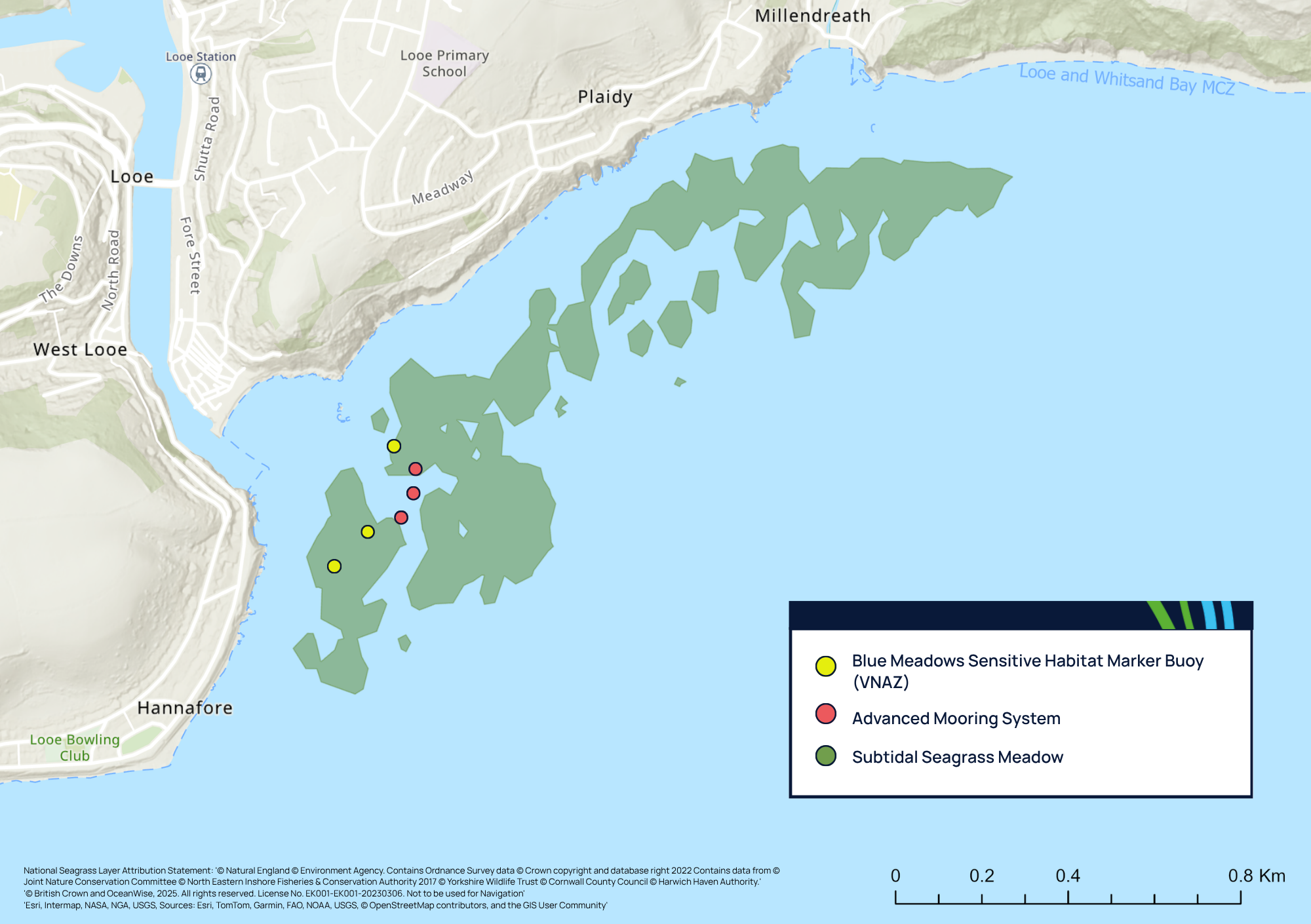
Looe is home to one of the largest seagrass meadows in the South West of England, extending from Hannafore Point to Millendreath. This extensive bed covers approximately 110 hectares (an area the same size as 154 football pitches!) and is made up of Zostera marina, commonly known as eelgrass.
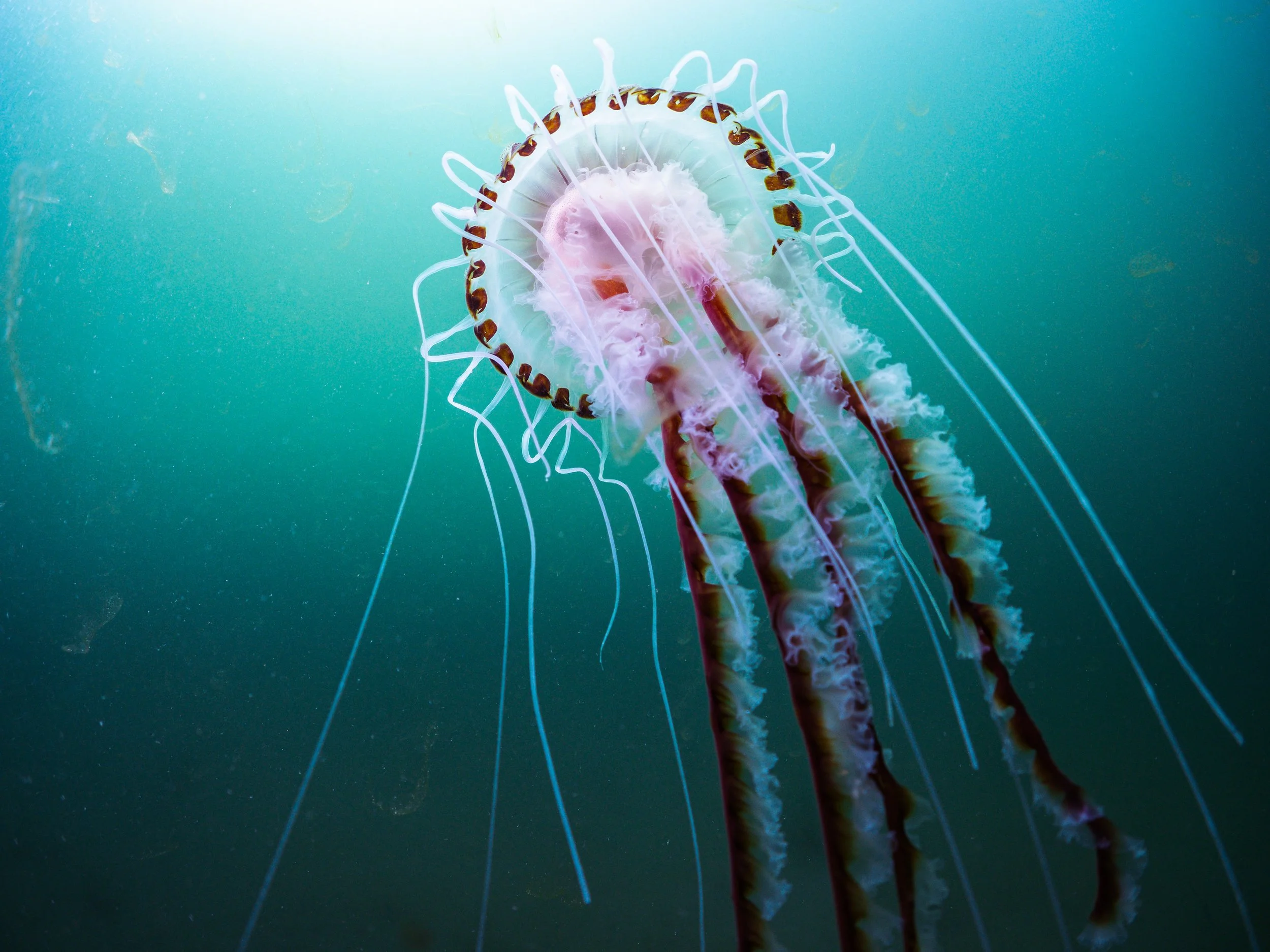
Seagrass is the Ocean’s only flowering plant, creating extraordinary ecosystems that sustain a diverse range of marine life. These habitats play a vital role in the resilience of our harbour and coastline, while also supporting our coastal community who depend on a healthy Ocean.
Healthy seagrass meadows provide a wide range of environmental and societal benefits:
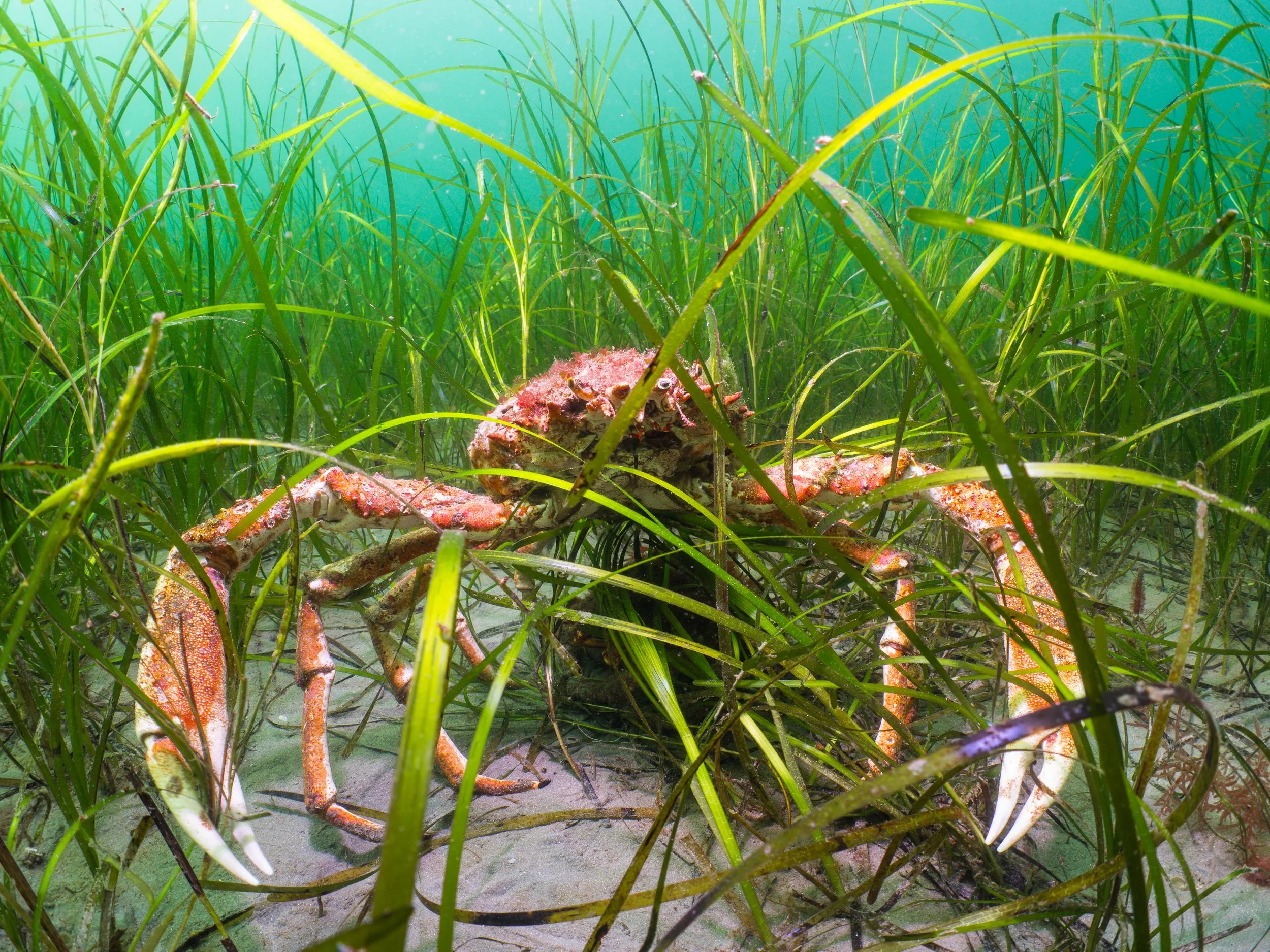
Biodiversity hotspot: A single hectare can support 80,000 fish and 100 million invertebrates [1], providing food and shelter for species like sharks, seahorses, and crabs.
Carbon Storage: Seagrass meadows are powerful ‘blue carbon’ sinks, storing up to 20% of oceanic carbon despite covering less than 1% of the seabed[2].
Water Quality: Seagrasses filter nutrients, improving water clarity, and can reduce harmful bacteria within surrounding water by up to 50%[3].
Coastal Protection: Their extensive root systems stabilise sediments, and leaves reduce wave energy by up to 40% [5], limiting erosion and storm damage.
Fisheries: Acting as important nurseries for many commercial species which support food security and local economies. Within the southwest, 37% of our commercially caught fish species depend on seagrass meadows during their lifecycle.
Societal wellbeing: Healthy seas contribute to healthy communities. Access to clean coastal waters supports recreation, wellbeing and fosters a strong connection between people and the Ocean[4].
Sadly, seagrass ecosystems are declining at an alarming rate. Since the 1940’s the UK has lost nearly over 40% of its seagrass meadows, and globally an area the size of a football pitch is lost every 30 minutes. Physical disturbance from certain boating activity and poor water quality remains the habitats largest threats.
The following measures are being introduced within Looe to reduce physical pressures on the seabed.
Protecting a sensitive habitat
Blue Meadows Sensitive Habitat Marker Buoys have been placed to highlight areas of seagrass. These double up as 5 knot speed marks to the harbour entrance as well as designating a Voluntary No Anchor Zone or VNAZ to encourage sustainable boating practices and minimise anchoring disturbance to the seabed.
Advanced Mooring Systems
To further protect the seabed Advanced Mooring Systems (AMS) have been installed. These low impact moorings are designed as an alternative to anchoring, minimising damage to the seabed. Traditional anchoring and mooring systems can harm sensitive habitats as their chains drag along the seabed with the movement of the tide. By suspending the mooring chain using a series of mid-water floats, these Advanced Mooring Systems allow seagrass to grow undisturbed.
Three Advanced Mooring Systems are available within Looe for day use. They are designed to be safe, secure and easy to use, providing a sustainable alternative to anchoring in sensitive areas.
References
[1] Reynolds, P.L. Seagrass and Seagrass Beds. Smithsonian Ocean. Available at: https://ocean.si.edu/ocean-life/plants-algae/seagrass-and-seagrass-beds (Accessed: 06 January 2023).
[2] Fourqurean, J.W., Duarte, C.M., Kennedy, H., Marbà, N., Holmer, M., Mateo, M.A., et al. (2012). Seagrass ecosystems as a globally significant carbon stock. Nature Geoscience, 5(7), 505–509. https://doi.org/10.1038/ngeo1477
[3] Lamb, J.B., van de Water, J.A.J.M., Bourne, D.G., Altier, C., Hein, M.Y., Fiorenza, E.A., et al. (2017). Seagrass ecosystems reduce exposure to bacterial pathogens. Science, 355(6326), 731–733. https://doi.org/10.1126/science.aal1956
[4] Foster, N.R., Apostolaki, E.T., DiBenedetto, K., Duarte, C.M., Gregory, D., Inostroza, K., et al. (2023). Societal value of seagrass from historical to contemporary perspectives. People and Nature. https://doi.org/10.1002/pan3.10493
[5] Donatelli, C., Ganju, N.K., Fagherazzi, S., Leonardi, N. (2019). Hydrodynamic changes from seagrass decline in microtidal estuaries. Estuarine, Coastal and Shelf Science, 217, 212–222. https://doi.org/10.1016/j.ecss.2018.11.009
[6] UNEP (2020). Out of the Blue: The Value of Seagrasses to the Environment and People. Nairobi: United Nations Environment Programme. Available at: https://www.unep.org/resources/report/out-blue-value-seagrasses-environment-and-people